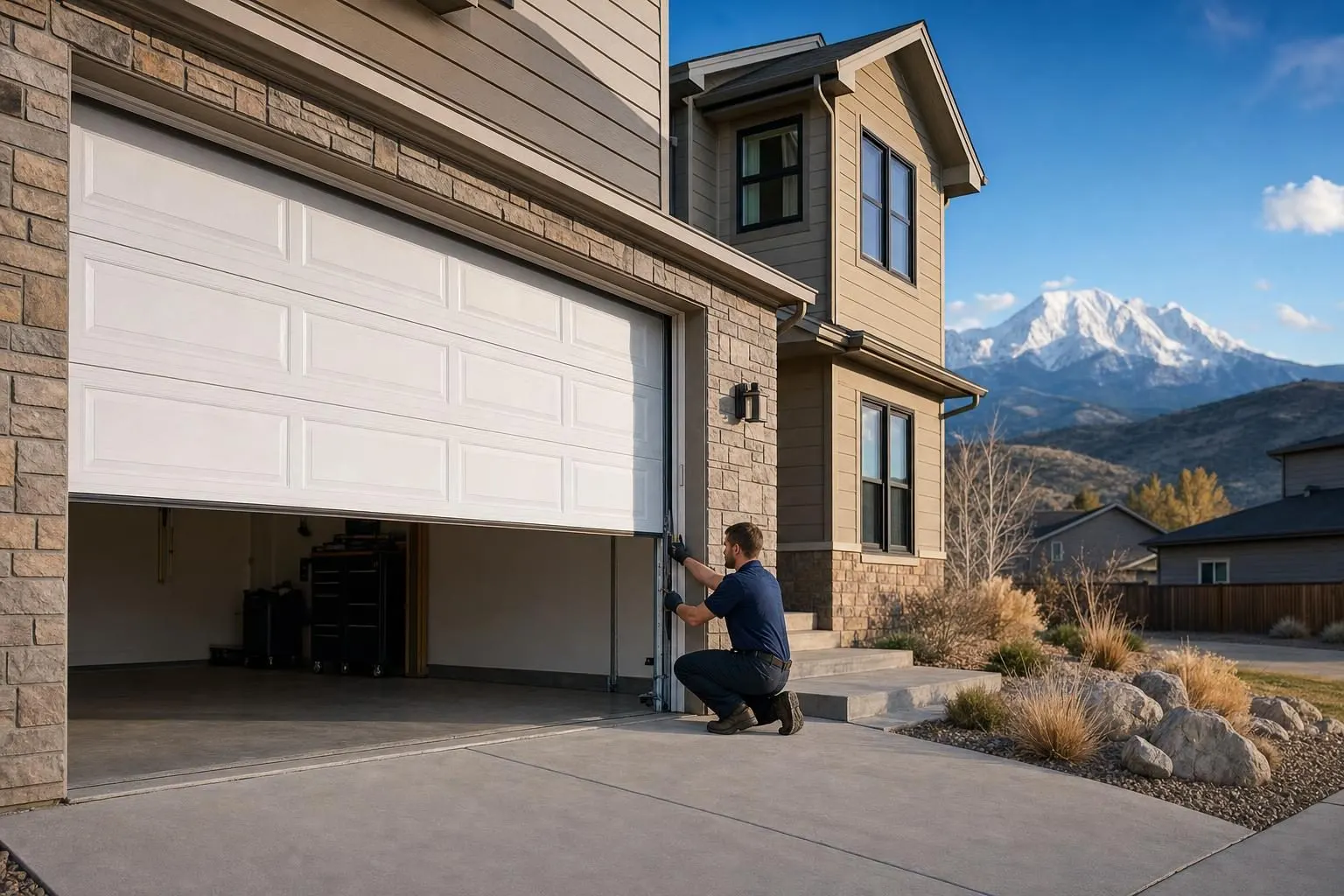
Door won't lift? It may be the spring
Garage Door Spring Repair in Longmont, CO
Heard a loud bang and now the door won't open? Call anytime for broken spring help in Longmont.
Door won't lift? It may be the spring
Heard a loud bang and now the door won't open? Call anytime for broken spring help in Longmont.
A broken spring is one of the most common garage door failures, and it usually announces itself. Many homeowners hear a loud bang from the garage, then find the door won't open or the opener strains and lifts it only a few inches. Look above the door: a torsion spring with a clear gap in its coils is broken.
Springs do the heavy lifting on a garage door. A typical two-car steel door can weigh well over 100 pounds, and the springs balance that weight so the opener, or your arm, only has to move it. When a spring breaks, that balance is gone, which is why the door suddenly feels like it is bolted to the floor.
Springs are rated for a certain number of open-and-close cycles. A common standard spring is rated around 10,000 cycles, which works out to several years for a household that uses the garage as its front door. Cold mornings add stress to steel that is already near the end of its life, which is part of why spring calls rise in winter along the Front Range. Rust, a door that has been out of balance for months and springs that were undersized for the door's weight all shorten that life.
A wound torsion spring holds enough energy to cause serious injury if a winding bar slips or the wrong set screw is loosened. DASMA, the trade association for door and opener manufacturers, calls springs the most dangerous part of a garage door and advises that springs, cables and bottom brackets be handled only by a trained technician (DASMA safety tips). Do not try to open a door with a broken spring using the opener, and do not loosen any bolt on the bottom brackets, which are under spring tension.
On doors with two torsion springs, many technicians recommend replacing both at once, since the second spring has the same number of cycles and often fails soon after. Ask about higher-cycle springs if you open the door many times a day. The extra cost is usually small compared with a second service call.
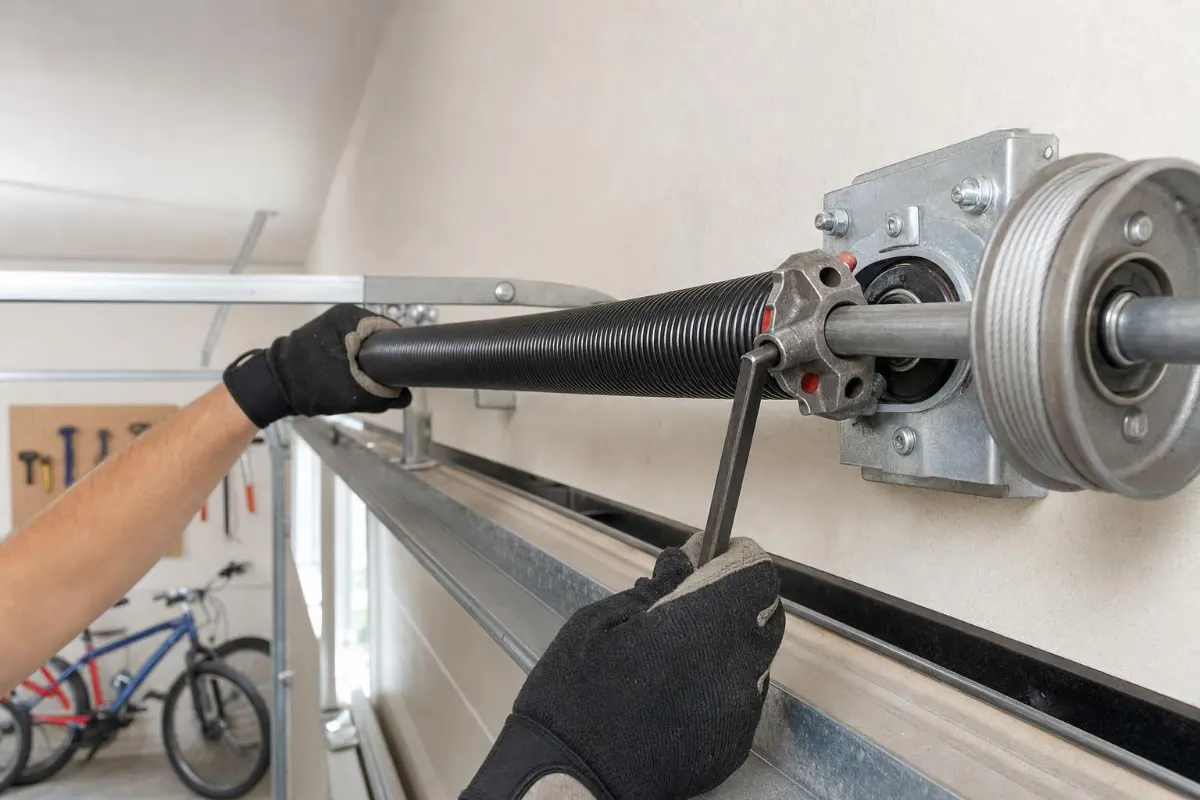
Spring work covers more than swapping the broken coil.
Single or paired springs sized to the door's weight and height.
New springs with safety cables threaded through them.
Longer-rated springs for doors used many times a day.
Spring tension set so the door holds at mid-height.
Cables and drums inspected, since a spring break often damages them.
Springs sized to the door's weight, not just whatever is on the truck.
Ask for a price on one spring and on both so you can choose.
Ask the technician what the spring and labor warranty covers.
Broken spring in Longmont? Call or send a quick request.
Free — no obligations
Don't run the opener with a broken spring; it can strip gears or snap a cable.
Call or send the form and mention that you heard a bang or see a gap in the spring.
The technician measures the door and spring so the replacement matches the weight.
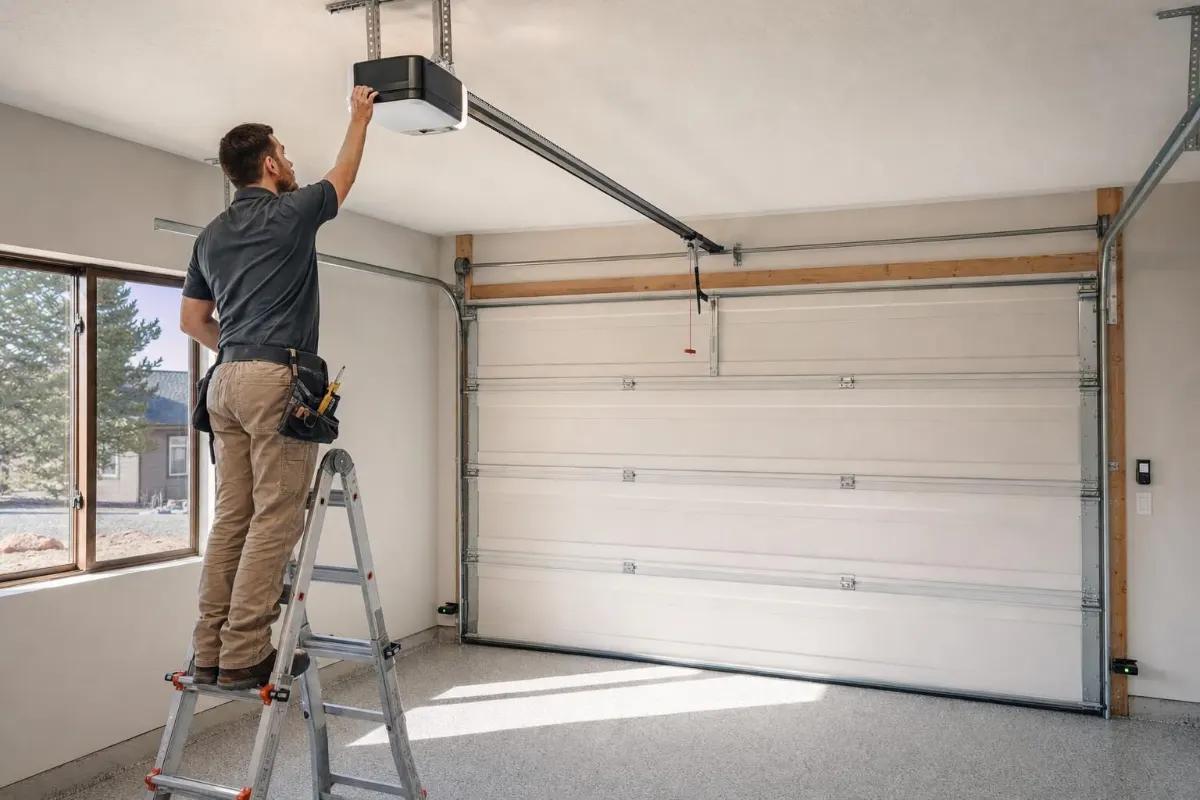
The door is balanced and the opener's reverse function is checked.
Look at the spring above the door. A two-inch or larger gap between coils means it has snapped. Other signs are a loud bang from the garage, a door that only lifts a few inches, or an opener that hums but can't raise the door.
It is not safe to try. The door is very heavy without the spring and can drop suddenly. If a car is trapped inside, tell the technician when you call so the visit can be prioritized.
A standard torsion spring is commonly rated around 10,000 cycles. For a family that opens the door four or five times a day, that is often five to seven years. High-cycle springs last longer.
Often yes. Paired springs wear at the same rate, so the second one tends to fail soon after the first. The technician can price both options.